
What Is a SaaS Product? A Complete Explanation
Everything you need to know about SaaS products. What they are, how they work, how they make money, and why businesses are building them.
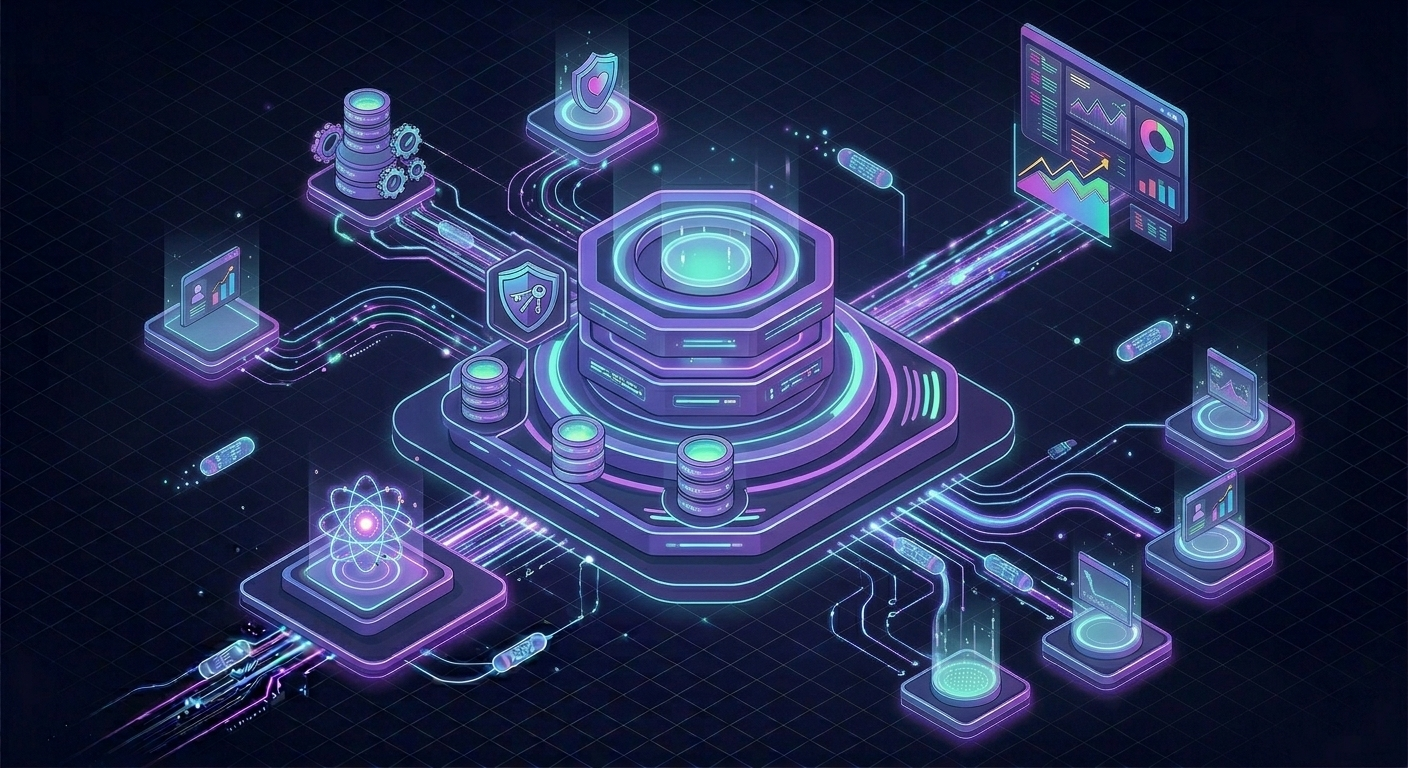
SaaS stands for Software as a Service. It is a way of delivering software over the internet, where users access the application through a web browser instead of installing it on their computers. The software runs on the provider’s servers, and customers pay a recurring subscription fee to use it.
If you’ve used Gmail, Slack, Notion, or Shopify, you’ve used SaaS.
How SaaS Differs from Traditional Software
Traditional software follows a different model. You buy a license, download the program, install it on your machine, and run it locally. Updates are manual. Data lives on your hard drive. You pay once.
SaaS flips all of that:
| Traditional Software | SaaS | |
|---|---|---|
| Delivery | Downloaded and installed | Accessed via browser |
| Payment | One-time license fee | Monthly or annual subscription |
| Updates | Manual downloads | Automatic, continuous |
| Data storage | Local machine | Provider’s cloud servers |
| Maintenance | Customer’s responsibility | Provider’s responsibility |
| Access | One device | Any device with internet |
The shift from traditional software to SaaS has been one of the biggest changes in the technology industry over the past two decades. Most new business software today is built as SaaS.
How SaaS Products Work (Technical Overview)
A SaaS product is a web application hosted on cloud infrastructure. Here’s what the architecture typically looks like:
- Frontend. The user interface that runs in the browser. Built with frameworks like React, Vue, or Angular.
- Backend. The server-side application that handles business logic, authentication, and data processing. Built with technologies like Spring Boot, Node.js, Django, or Rails.
- Database. Where customer data is stored. PostgreSQL and MySQL are the most common choices.
- Cloud infrastructure. The servers, networking, and storage that keep everything running. Usually hosted on AWS, Google Cloud, or Azure.
- CDN (Content Delivery Network). Distributes static assets globally so the app loads fast regardless of the user’s location.
Most SaaS products use multi-tenant architecture. This means one instance of the application serves multiple customers. Each customer’s data is isolated, but they share the same codebase and infrastructure. This is what makes SaaS economically viable. The cost of running the software is spread across all customers.
The SaaS Business Model
The SaaS business model is built on recurring revenue. Instead of charging a large upfront fee, SaaS companies charge smaller amounts on a regular basis. This creates a predictable revenue stream that compounds over time.
Subscription pricing
Most SaaS products offer tiered pricing plans:
- Free or freemium. A limited version of the product at no cost. Designed to attract users and convert them to paid plans.
- Individual or starter. Basic features for small teams or solo users. Typically €10 to €50 per month.
- Professional or team. Advanced features, higher limits, and collaboration tools. Typically €50 to €200 per month.
- Enterprise. Custom pricing with dedicated support, compliance features, and SLAs.
Annual subscriptions are usually offered at a discount (often equivalent to 2 months free) to encourage longer commitments and reduce churn.
How SaaS companies make money
The math is straightforward. Acquire customers, keep them subscribed, and expand their accounts over time. The key metrics:
- MRR (Monthly Recurring Revenue). The total predictable revenue collected each month from all active subscriptions. This is the primary metric for measuring SaaS growth.
- ARR (Annual Recurring Revenue). MRR multiplied by 12. Used for annual planning and valuation.
- Net Revenue Retention (NRR). Measures how much revenue you keep from existing customers, including upgrades and downgrades. Above 100% means existing customers are spending more over time, even without new sales.
SaaS Metrics That Matter
If you’re building or evaluating a SaaS business, these are the numbers to watch:
Growth metrics
- MRR and ARR. Track these monthly. Healthy SaaS companies grow MRR by 10% to 20% month-over-month in the early stages.
- Customer count. Total paying customers and how fast that number is growing.
- Revenue per customer. Average MRR divided by total customers. This should increase over time through upsells and plan upgrades.
Retention metrics
- Churn rate. The percentage of customers who cancel their subscription in a given period. Monthly churn below 5% is considered healthy for SMB-focused SaaS. Enterprise SaaS should aim for below 1%.
- Logo churn vs. revenue churn. Logo churn counts customers lost. Revenue churn measures dollars lost. They tell different stories. Losing 10 small customers is very different from losing 1 large customer.
- Net revenue retention. The gold standard retention metric. If NRR is above 100%, your business grows even without adding new customers.
Unit economics
- CAC (Customer Acquisition Cost). How much you spend to acquire one new customer. Includes marketing, sales, and onboarding costs.
- LTV (Lifetime Value). The total revenue a customer generates before they churn. Calculated as average revenue per customer divided by monthly churn rate.
- LTV:CAC ratio. The relationship between what a customer is worth and what it costs to acquire them. A ratio of 3:1 or higher is considered healthy. Below 1:1 means you’re losing money on every customer.
Examples of SaaS Categories
SaaS products exist in nearly every industry. Here are some of the most common categories:
- Project management. Asana, Monday, Linear, Jira.
- Communication. Slack, Microsoft Teams, Zoom.
- CRM (Customer Relationship Management). Salesforce, HubSpot, Pipedrive.
- Accounting and finance. Xero, QuickBooks Online, FreshBooks.
- Marketing. Mailchimp, HubSpot Marketing, SEMrush.
- Developer tools. GitHub, GitLab, Vercel, Datadog.
- Design. Figma, Canva, Adobe Creative Cloud.
- HR and recruiting. BambooHR, Greenhouse, Workday.
- E-commerce. Shopify, BigCommerce.
- Analytics. Amplitude, Mixpanel, Plausible.
The pattern is clear. Any workflow that businesses perform repeatedly is a candidate for SaaS.
Advantages of SaaS
For users
- No installation. Open a browser and start working. No downloads, no setup, no IT department needed.
- Always up to date. New features and security patches are deployed automatically. Every user runs the latest version.
- Accessible everywhere. Work from any device with an internet connection. Office, home, phone.
- Lower upfront cost. A monthly subscription is easier to budget than a large one-time license fee.
- Scalability. Upgrade or downgrade your plan as your needs change. No wasted capacity.
For builders
- Recurring revenue. Predictable income that compounds over time. A SaaS business with low churn becomes more valuable every month.
- Direct customer relationship. You control the experience end to end. You can measure usage, gather feedback, and improve continuously.
- Faster iteration. Deploy updates to all users instantly. No version fragmentation. No backwards compatibility nightmares.
- Global distribution. Sell to anyone with internet access. No physical distribution, no regional licensing.
- Lower marginal cost. The cost of serving one additional customer is minimal once the infrastructure is built.
The SaaS Market in 2026
The global SaaS market continues to grow. Industry estimates place it above €250 billion in annual revenue in 2026, with consistent year-over-year growth.
Several trends are shaping the market:
- Vertical SaaS. Products built for specific industries (construction, healthcare, legal) are growing faster than horizontal tools. Specialists win over generalists.
- AI-native products. SaaS products built with AI at their core, not as an add-on, are creating new categories entirely. AI handles data extraction, content generation, analysis, and automation.
- Usage-based pricing. More companies are moving from flat subscriptions to pricing based on actual usage. This aligns cost with value and reduces friction for smaller customers.
- Product-led growth. Letting users try the product before talking to sales. Free tiers and self-serve onboarding are becoming the norm, even in enterprise SaaS.
- Consolidation. Customers are tired of managing dozens of subscriptions. Platforms that combine multiple tools into one are gaining ground.
Despite the maturity of the market, new SaaS products launch successfully every day. The key is solving a specific problem better than existing alternatives.
Who Should Build a SaaS Product
SaaS is a good fit if:
- You’ve identified a recurring problem that businesses or individuals face regularly and are willing to pay to solve.
- The problem is best solved with software and does not require heavy physical or in-person components.
- You can deliver value continuously. SaaS justifies recurring payment through ongoing value, not a one-time transaction.
- You have (or can build) technical capability. Either you can code, you have a technical co-founder, or you have the budget to hire a development team.
- You’re prepared for the long game. SaaS revenue compounds, but it takes time. Most successful SaaS companies took 18 to 24 months to reach meaningful revenue.
Who Should Not Build a SaaS Product
SaaS is not the right model for every situation:
- Your problem is a one-time event. If customers only need the solution once, a subscription doesn’t make sense. Consider a one-time purchase or a service instead.
- Your market is too small. If there are only 50 potential customers in the world, the recurring revenue won’t justify the development and maintenance cost.
- You need revenue immediately. SaaS revenue builds slowly. If you need cash now, consulting or services might be a better starting point.
- The problem doesn’t require software. Sometimes a spreadsheet, a checklist, or a phone call solves the problem just as well. Not everything needs an app.
- You’re building for a market you don’t understand. Domain expertise matters. The best SaaS products are built by people who deeply understand the problem because they’ve lived it.
The Bottom Line
SaaS is a delivery model, a business model, and an architectural approach. Software delivered over the internet, paid for with recurring subscriptions, and built on shared cloud infrastructure. It works because it aligns the interests of builders and users. Builders get predictable revenue and direct feedback. Users get software that improves every month without any effort on their part.
The model has reshaped the software industry. It’s accessible to small teams, scalable for large ones, and proven across virtually every market. If you have a problem worth solving and the ability to solve it with software, SaaS is one of the most effective ways to build a lasting business.
Ready to turn your SaaS idea into a real product? We help founders and companies design, build, and launch SaaS applications. Let’s talk about what you’re building.