
How to Build a SaaS Product from Scratch | A Step-by-Step Guide
A practical guide to building a SaaS product from idea to launch. Covers architecture, tech stack, billing, authentication, and go-to-market strategy.
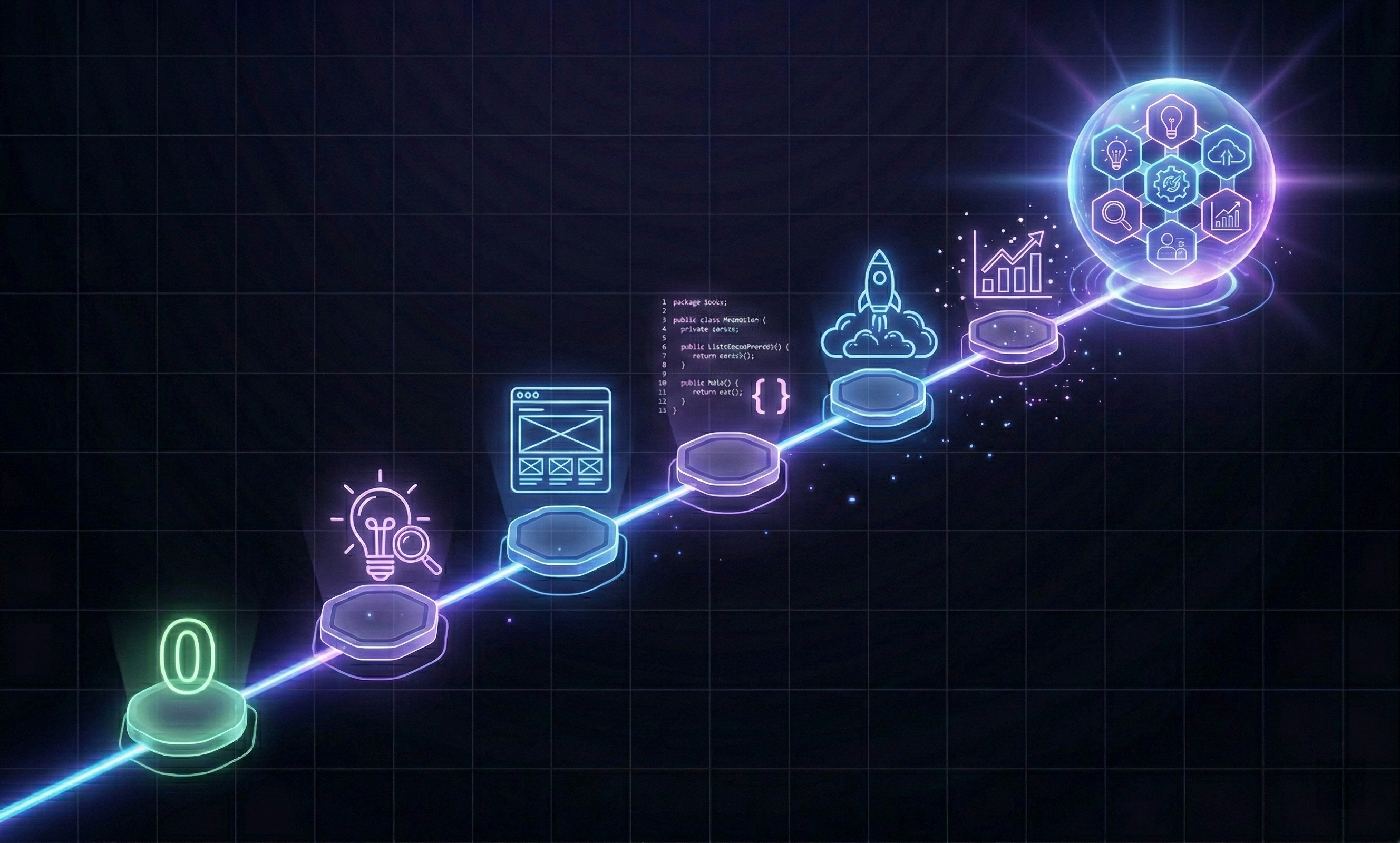
Building a SaaS product is one of the most rewarding things you can do in software. Recurring revenue, global reach, and a product that improves every month. But the path from idea to paying customers is full of decisions that can make or break your business.
This guide walks through the entire process. From validating your idea to launching and growing a product that people actually pay for.
What Makes SaaS Different
SaaS (Software as a Service) is software delivered over the internet, usually on a subscription basis. Users don’t install anything. They open a browser, log in, and use it.
This changes everything about how you build:
- You operate the software. Bugs, downtime, and performance are your responsibility. Not the customer’s.
- You update continuously. No version numbers. No upgrade cycles. Every user is on the latest version.
- Revenue is recurring. Customers pay monthly or annually. This means cash flow is predictable, but churn is a constant threat.
- Multi-tenancy is the norm. Multiple customers share the same application. Their data must be isolated.
These differences shape every technical and business decision you’ll make.
Phase 1: Validate the Idea
The biggest mistake SaaS founders make is building before validating. Writing code is the most expensive way to test an idea.
Talk to potential customers
Find 15 to 20 people who have the problem you want to solve. Interview them. Ask about their current workflow, what tools they use, what frustrates them, and how much they spend on existing solutions.
You’re looking for patterns. If 12 out of 15 people describe the same pain point, you might have something.
Check the competition
Competitors are a good sign. They prove the market exists. Study their pricing, features, reviews, and weaknesses. Read their 1-star reviews. That’s where unmet needs live.
Define your differentiator
You don’t need to be 10x better at everything. You need to be meaningfully better at one thing that matters to a specific audience. Maybe you’re faster, simpler, cheaper, or built for a niche that existing tools ignore.
Validate willingness to pay
This is the step most people skip. Ask directly: “If this existed, would you pay €50 per month for it?” Better yet, put up a landing page with pricing and a waitlist. Measure signups.
Phase 2: Define the MVP
An MVP is the smallest version of your product that delivers real value. Not a prototype. Not a demo. A usable product that solves the core problem well enough that people will pay for it.
How to scope an MVP
- List every feature you can imagine.
- For each feature, ask: “Can the product deliver value without this?”
- Remove everything where the answer is yes.
- What remains is your MVP.
Be ruthless. Most MVPs should take 2 to 4 months to build. If yours takes longer, you’re building too much.
Must-have features for any SaaS MVP
No matter what your product does, you’ll need these:
- Authentication. Users need to sign up, log in, and manage their accounts. Use a proven solution like Auth0, Clerk, or Supabase Auth. Don’t build your own.
- Multi-tenancy. Each customer’s data must be isolated. Decide on your tenancy model early (more on this below).
- Billing and subscriptions. Customers need to pay you. Stripe is the standard for a reason.
- A basic admin dashboard. You need visibility into what’s happening. User counts, subscription status, error rates.
- Onboarding flow. The first 5 minutes determine whether a user stays or leaves. Guide them through setup.
Everything else is specific to your product.
Phase 3: Architecture Decisions
The technical choices you make now will live with you for years. Get these right.
Multi-tenant vs. single-tenant
Most SaaS products should start with multi-tenant architecture. One application instance serves all customers. It’s cheaper to operate, simpler to deploy, and easier to update.
Single-tenant (one instance per customer) makes sense for enterprise products with strict compliance requirements. But it costs significantly more to run and maintain.
For a deep dive, read our multi-tenant vs. single-tenant architecture guide.
Choosing a tech stack
Pick technologies your team knows well. Productivity beats theoretical performance at the early stage. That said, here are solid choices for SaaS:
Backend:
- Spring Boot (Java/Kotlin) for enterprise-grade applications with complex business logic. Excellent ecosystem, strong typing, battle-tested in production.
- Node.js with Express or Fastify for lighter APIs and real-time features.
- Django or Rails for rapid prototyping when speed to market is the priority.
Frontend:
- React is the safe bet. Largest ecosystem, easiest to hire for.
- Next.js gives you server-side rendering, API routes, and excellent performance out of the box.
Database:
- PostgreSQL. Start here. It handles relational data, JSON, full-text search, and row-level security. You can go very far with Postgres alone.
- Add Redis for caching and session management.
Infrastructure:
- AWS, GCP, or Azure for hosting. Pick the one your team knows.
- Docker for containerization. It makes deployment consistent across environments.
- Vercel or Railway if you want to move fast and not manage infrastructure yourself.
API design
Build a clean REST API or GraphQL API from day one. Even if your only client is your own frontend, a well-designed API makes everything easier: mobile apps, integrations, public APIs later.
Version your API. Use proper HTTP status codes. Document it.
Phase 4: Building the Product
This is where most of the time goes. Here’s how to structure the work.
Set up the foundation first
Before building any features, get these in place:
- CI/CD pipeline. Automated testing and deployment from day one. GitHub Actions or GitLab CI work well.
- Environment setup. Local development, staging, and production. Use environment variables for configuration.
- Database migrations. Use a migration tool (Flyway for Java, Prisma Migrate for Node.js, Alembic for Python). Never modify the database by hand.
- Logging and error tracking. Sentry for errors, structured logging for everything else.
Build authentication
Don’t build auth from scratch. It’s a solved problem, and the security implications of getting it wrong are severe.
Recommended approach:
// Using Clerk with Next.js as an example
import { clerkMiddleware } from "@clerk/nextjs/server";

export default clerkMiddleware();

export const config = {
  matcher: ["/dashboard(.*)", "/api(.*)"],
};
This gives you sign-up, login, password reset, multi-factor auth, and session management. In an afternoon.
Build billing and subscriptions
Stripe is the standard for SaaS billing. Here’s the typical setup:
- Define your pricing tiers in the Stripe dashboard.
- Create a checkout flow using Stripe Checkout or embed Stripe Elements.
- Handle webhooks for subscription events (created, updated, cancelled, payment failed).
- Sync subscription status to your database so your app knows what each customer has access to.
// Handling a Stripe webhook event
import Stripe from "stripe";

async function handleWebhook(event: Stripe.Event) {
  switch (event.type) {
    case "customer.subscription.created":
      const subscription = event.data.object as Stripe.Subscription;
      await db.tenant.update({
        where: { stripeCustomerId: subscription.customer as string },
        data: {
          plan: subscription.items.data[0].price.id,
          status: subscription.status,
        },
      });
      break;

    case "customer.subscription.deleted":
      // Handle cancellation
      break;

    case "invoice.payment_failed":
      // Notify the customer, retry logic
      break;
  }
}
Subscription models that work
Most successful SaaS products use tiered pricing:
- Free tier or trial. Lets users experience the product before committing. 14-day trials convert better than freemium for most B2B products.
- Starter plan (€29 to €49/month). Core features for small teams.
- Pro plan (€99 to €199/month). Advanced features, higher limits, priority support.
- Enterprise (custom pricing). Dedicated support, SLAs, custom integrations. Priced per deal.
Annual billing at a discount (typically 2 months free) improves cash flow and reduces churn.
Build the core product
With auth, billing, and infrastructure in place, build the features that make your product valuable. Follow these principles:
- Ship small increments. Weekly releases beat quarterly launches.
- Build the happy path first. Get the core workflow working before handling edge cases.
- Write tests for business logic. Skip testing trivial CRUD operations. Focus on the logic that matters.
- Get feedback early. Put the product in front of users as soon as the core workflow works.
Phase 5: Launch Strategy
Launching is not a single event. It’s a process.
Pre-launch (4 to 6 weeks before)
- Build a landing page with clear messaging and a waitlist.
- Write 3 to 5 pieces of content that demonstrate your expertise in the problem space.
- Reach out to your interview contacts. Offer early access.
- Set up analytics (Plausible, PostHog, or Mixpanel) and error tracking.
Launch week
- Open access to waitlist subscribers first. Fix the issues they find.
- Post on relevant communities (Hacker News, Product Hunt, Reddit, industry forums).
- Send personal emails to potential customers. Not a mass blast. Personal, specific emails.
- Offer a launch discount to create urgency.
Post-launch
- Respond to every piece of feedback within 24 hours.
- Track activation metrics. How many signups actually complete onboarding and use the product?
- Fix bugs immediately. Nothing kills trust faster than a broken product during the first week.
Phase 6: Post-Launch Growth
The real work starts after launch.
Monitoring
Track these metrics from day one:
- MRR (Monthly Recurring Revenue). Your primary growth indicator.
- Churn rate. The percentage of customers who cancel each month. Below 5% is healthy for SMB SaaS.
- Activation rate. The percentage of signups who reach the “aha moment.”
- Support ticket volume. Rising tickets can signal UX problems or missing features.
Feedback loops
Build feedback directly into the product:
- An in-app feedback widget.
- Automated emails after key milestones (first week, first month).
- Regular calls with your most active users.
The features your customers ask for most frequently should drive your roadmap.
Iteration
Ship improvements weekly. Prioritize based on impact:
- Bugs that affect paying customers.
- Improvements to activation and onboarding.
- Features that reduce churn.
- Features that attract new customers.
Notice that new features are last on the list. Keeping existing customers happy is almost always more valuable than building shiny new things.
Common Mistakes Founders Make
We’ve worked with dozens of SaaS founders. These are the patterns that cause the most pain.
Building too much before launching
The MVP should feel uncomfortably small. If you’re not slightly embarrassed by v1, you waited too long.
Ignoring billing until the end
Billing is not a feature you bolt on. It’s core infrastructure. Build it early. Test it thoroughly. Stripe’s test mode makes this easy.
Choosing the wrong pricing
Pricing too low is more common than pricing too high. If everyone says yes to your price without hesitation, you’re leaving money on the table. Raise prices until about 20% of prospects say no.
Skipping infrastructure investment
“We’ll add tests later.” “We’ll set up CI later.” “We’ll add monitoring later.” Later never comes. These investments pay off immediately and compound over time.
Not talking to customers
Data tells you what’s happening. Customers tell you why. You need both. Schedule regular conversations with your users, especially the ones who are churning.
Trying to serve everyone
A SaaS product that tries to serve every market serves none of them well. Pick a niche. Dominate it. Expand later.
The Bottom Line
Building a SaaS product is a marathon, not a sprint. The companies that succeed are the ones that validate before building, ship small and fast, listen to their customers, and iterate relentlessly.
The technical foundation matters. Get authentication, billing, and multi-tenancy right from the start. But technology alone doesn’t build a business. The product has to solve a real problem for people who are willing to pay for the solution.
Start with the problem. Build the smallest thing that solves it. Get it in front of real users. Then improve it every single week.
Thinking about building a SaaS product? We help founders go from idea to launch with the right architecture, tech stack, and development process. Let’s talk about your project.